
Is There Uber for Wheelchairs in Watford?
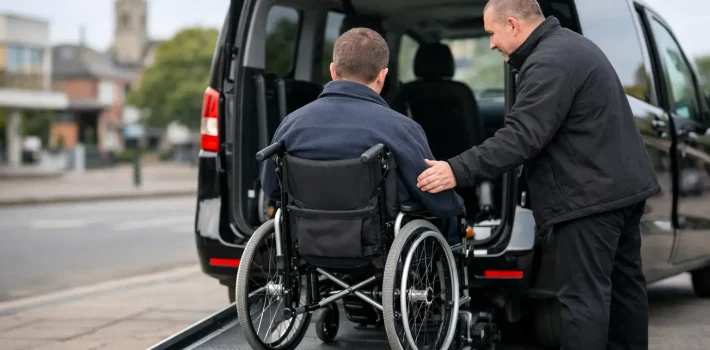
When a journey depends on wheelchair access, the question is usually not just is there Uber for wheelchairs. The real question is whether the right vehicle will actually turn up, on time, with a driver who understands what is needed. That matters far more than having an app on your mobile phone.
Is There Uber for Wheelchairs?
Yes, there are app-based transport services that offer wheelchair-accessible journeys in some areas. But the short answer comes with a catch – availability can be inconsistent, coverage depends on location, and the type of assistance provided is not always clear at the point of booking.
For passengers in Watford and surrounding areas, that distinction matters. If you are travelling to a hospital appointment, heading to the station, going to the airport, or arranging transport for a family member, you need more than a broad promise of accessibility. You need to know whether the vehicle can take a wheelchair properly, whether the pickup time is reliable, and whether the booking process is straightforward.
That is where local private hire firms often make more practical sense than relying only on a large app platform.
What people usually mean by “Uber for wheelchairs”
Most people asking is there uber for wheelchairs are looking for one of two things. Either they want the convenience of booking quickly through a mobile phone, or they want a wheelchair-accessible vehicle without having to ring round several companies.
Both are reasonable. The problem is that accessibility is not a standard feature in every fleet. Some services may offer accessible vehicles only in certain towns. Some may have very limited numbers on the road at quieter times. Others may treat wheelchair access as a specialist request rather than a normal booking option.
So the issue is not whether wheelchair-accessible transport exists. It does. The issue is whether it is available when and where you need it, and whether the service is set up to handle the journey properly.
Why availability varies so much
Wheelchair-accessible transport depends on fleet composition. A standard saloon car will not do the job. The vehicle needs the correct space, access arrangement, and restraint systems for a safe journey. That means operators need dedicated accessible vehicles, and those vehicles have to be scheduled sensibly.
Demand also varies by time of day and type of journey. School-run periods, medical appointments, airport transfers, and weekend events can all put pressure on availability. In a larger city, a passenger may find an accessible vehicle through an app more easily simply because there are more drivers on the road. In smaller towns or suburban areas, supply is often tighter.
This is why booking ahead can make a significant difference. If the journey is important, same-minute availability is helpful in theory but not always dependable in practice.
Is there Uber for wheelchairs in Watford, or is local booking better?
In Watford, local booking is often the safer option for wheelchair-accessible travel. That is not because app-based services have no place. They can be useful for general travel. But for accessible journeys, certainty is usually more valuable than speed of booking alone.
A local private hire company with wheelchair-accessible vehicles can confirm the job properly, explain vehicle suitability, and give you a clearer idea of pickup arrangements. That is particularly helpful if the passenger is staying in the chair during travel, uses additional mobility equipment, or needs a journey at a specific time.
A dependable operator should also be able to support a wider range of travel needs. That includes local trips, station transfers, airport journeys, recurring bookings, and travel arranged by family members or carers.
What to check before booking a wheelchair-accessible ride
Not all accessible bookings mean the same thing, so it is worth checking a few practical points before confirming the journey.
First, ask whether the vehicle is a proper wheelchair-accessible vehicle or whether it simply has extra boot space for a folded wheelchair. Those are very different things. If the passenger is remaining seated in the wheelchair during the trip, the vehicle must be designed for that.
Second, confirm the pickup details clearly. Access at the collection point matters just as much as the journey itself. A narrow driveway, kerb height, steps, or a busy station forecourt can all affect how smoothly the pickup goes.
Third, be clear about passenger needs. Some customers travel independently. Others may have a companion, luggage, medical equipment, or a specific boarding requirement. Giving accurate information helps the operator send the right vehicle and avoid delays.
Finally, check whether the service can accommodate return journeys or waiting time if needed. This is especially useful for clinics, day trips, and appointments where timing may change.
The difference between convenience and reliability
A lot of transport marketing focuses on convenience, and that makes sense. People want fast booking, quick confirmation, and clear prices. But accessible travel often demands one more layer – operational reliability.
That means a licensed driver arriving when expected. It means a vehicle that matches the booking. It means not having to explain wheelchair requirements repeatedly or discover at the last minute that no suitable car is available.
For many passengers, especially those booking for a parent, child, client, or patient, reliability is the deciding factor. A journey that starts late or with the wrong vehicle can disrupt the whole day.
When a local private hire service is the stronger choice
There are several situations where a local operator is often the better fit. Airport transfers are one. These journeys involve timing, luggage, terminal access, and often longer distances. A confirmed accessible booking is far less stressful than hoping the right car appears at the right moment.
Medical appointments are another. If a pickup needs to happen at a set time, with a suitable vehicle and a driver who understands the booking notes, direct scheduling is usually preferable.
Recurring transport also benefits from this approach. School runs, regular treatment visits, and account-based business travel all work better when the operator knows the requirement in advance.
This is where a provider such as 247 Cars Watford can be especially useful – not because the service needs to be complicated, but because accessible travel works best when the basics are handled properly.
Booking by app is helpful, but support still matters
Many customers prefer app-based booking, and that is completely understandable. It is quick, familiar, and easy to manage. For wheelchair-accessible transport, though, human support still has a clear role.
If the passenger has specific mobility needs, if the journey is time-sensitive, or if someone else is arranging the travel, speaking to a real operator can save time overall. It reduces assumptions and makes it easier to confirm that the booking details are correct.
This is not a case of old-fashioned versus modern. The best service usually combines both – easy booking options, plus responsive support when the journey needs more than a standard car.
A practical way to think about wheelchair-accessible transport
Instead of asking only is there uber for wheelchairs, it helps to ask a more useful set of questions. Can I book an accessible vehicle in my area? Can I rely on it at the time I need? Will the operator understand the journey requirements? And if plans change, can I speak to someone quickly?
Those questions get closer to what most passengers actually care about. They are not looking for a brand label. They are looking for safe, punctual and straightforward transport.
For some journeys, an app-based option may be enough. For others, especially where timing and accessibility are critical, a local private hire firm with wheelchair-accessible vehicles is often the more dependable choice.
If you are arranging travel in Watford, the best approach is simple: book with a service that can confirm the vehicle, understand the access requirement, and turn up ready for the journey. That is what makes accessible transport genuinely useful, not just available.


Leave a Comment